
Outdated Systems
Legacy applications limit agility and hold back innovation.
Build agile, scalable, and secure digital platforms that support evolving business needs. Accelerate innovation, enhance operational efficiency, and deliver lasting business value through modern applications.
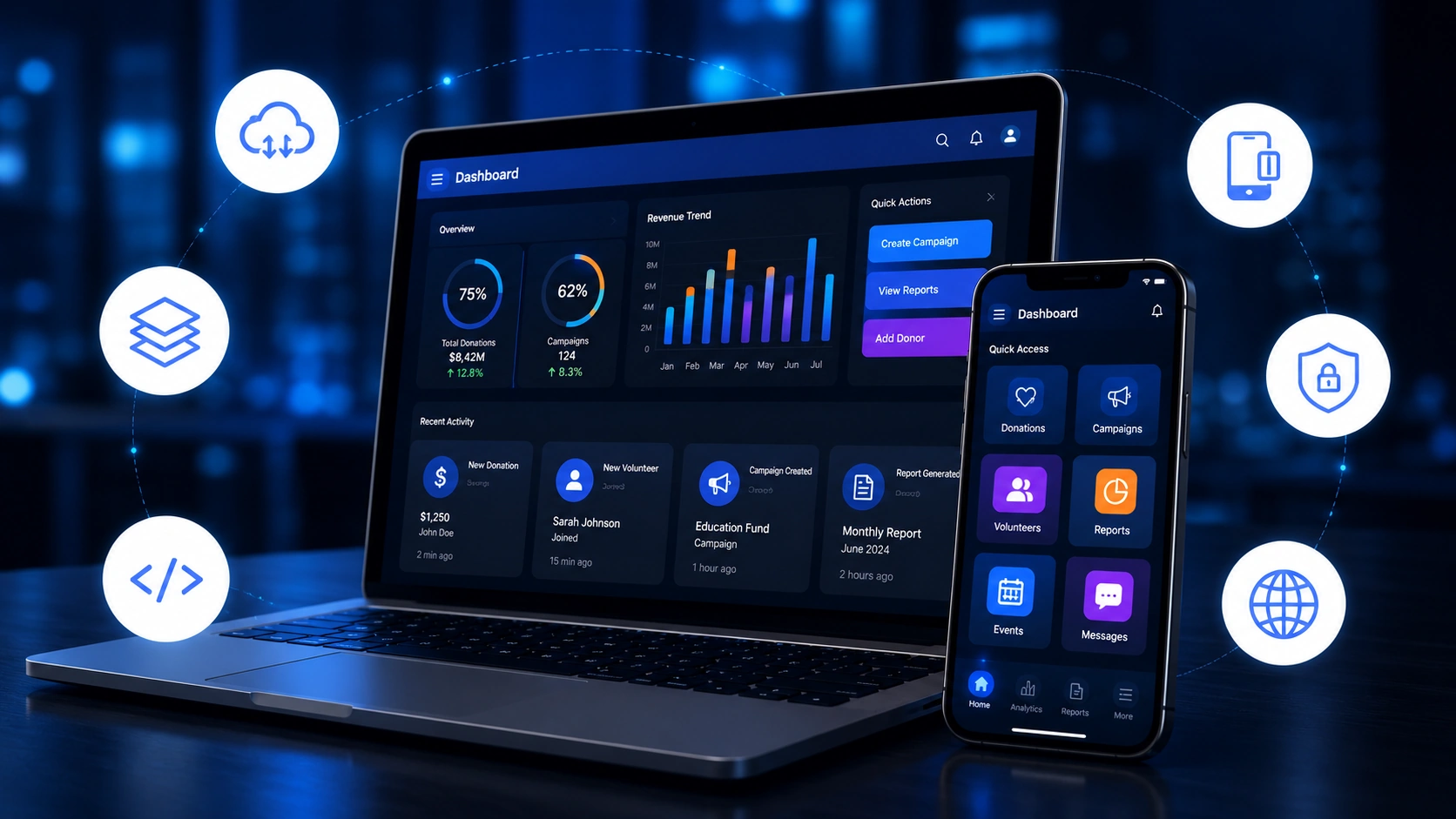
Are you dealing with these problems?
Legacy applications limit agility and hold back innovation.
Data and systems operate in silos, reducing efficiency and insight.
Lengthy development cycles delay product launches and business opportunities.
Outdated, complex interfaces frustrate customers and employees.
Applications struggle to handle growing demand and changing business needs.
Rising costs from custom workarounds and outdated technology.
Here's what can improve.
Reduce time-to-market and turn ideas into value sooner.
Deliver intuitive, modern experiences that increase satisfaction and productivity.
Integrate data and systems to create a unified, real-time view of your business.
Eliminate inefficiencies and lower long-term development and maintenance costs.
Build flexible platforms that grow with your business needs.
Enable new digital products, services, and business models.
SRISYS Digital Platforms & Applications Framework™
Understand goals, assess current state, and define the right strategy.
Create secure, scalable architectures aligned to business needs.
Use modern technologies and best practices to build high-quality applications.
Seamlessly connect systems, data, and third-party platforms.
Deploy with confidence, monitor performance, and continuously optimize.
Leverage emerging technologies to drive continuous innovation and new business value.
Tailored solutions for your unique needs.
Transform legacy systems into modern, scalable applications.
Build secure, scalable digital platforms.
Leverage the cloud for greater agility and scale.
Connect systems, data, and third-party services.
Design intuitive, engaging experiences.
Faster, safer software delivery.
Maximize performance, reliability, and cost efficiency.
Digital platforms are integrated technology environments that enable organizations to deliver digital products, services, business processes, and customer experiences through connected applications, data, and services. Unlike standalone software applications, digital platforms provide a scalable foundation that supports collaboration, automation, innovation, and seamless interactions across employees, customers, partners, and suppliers.
Modern digital platforms typically combine web applications, mobile applications, cloud services, APIs, enterprise systems, analytics, Artificial Intelligence, identity management, and integration capabilities into a unified ecosystem. They enable organizations to launch new digital services more quickly, improve operational efficiency, enhance customer engagement, and respond rapidly to changing market demands.
As organizations accelerate digital transformation, digital platforms become the foundation for innovation by enabling continuous development, business agility, and enterprise-wide connectivity. Rather than supporting a single business function, digital platforms serve as strategic business assets that power modern enterprises.
Digital platforms have become essential because they enable organizations to operate more efficiently, innovate faster, improve customer experiences, and adapt to rapidly changing business environments. As customer expectations continue to evolve and competition increases, organizations need flexible technology foundations that support continuous innovation rather than isolated technology solutions.
Digital platforms unify enterprise applications, business processes, customer channels, analytics, and cloud services into a connected ecosystem that improves collaboration and accelerates decision-making. They reduce operational complexity by integrating systems, automating workflows, and providing real-time access to enterprise information.
Organizations that invest in modern digital platforms improve business agility, shorten product development cycles, increase employee productivity, strengthen customer engagement, and create scalable technology environments that support long-term growth and digital innovation.
Digital platform modernization is the process of transforming legacy applications and technology environments into modern, scalable, cloud-enabled digital platforms that better support business objectives, customer expectations, and future innovation. Modernization extends beyond upgrading technology—it rethinks how applications, data, integrations, security, and user experiences work together to deliver greater business value.
Modernization initiatives may include cloud migration, application modernization, API-first architecture, microservices adoption, user experience improvements, enterprise integration, DevSecOps implementation, Artificial Intelligence integration, and automation of business processes. Organizations also simplify legacy environments by reducing technical debt, eliminating outdated technologies, and improving operational efficiency.
Successful digital platform modernization enables organizations to respond faster to market opportunities, improve reliability, strengthen cybersecurity, accelerate software delivery, and create digital ecosystems that continuously evolve with changing business needs.
Digital platforms support business growth by enabling organizations to launch new products and services faster, improve customer experiences, optimize business operations, and create new revenue opportunities. Rather than limiting innovation through disconnected systems, digital platforms provide a flexible foundation that allows organizations to scale efficiently while responding quickly to changing market conditions.
Modern digital platforms improve collaboration across departments, automate business processes, integrate enterprise systems, enable real-time analytics, and support personalized customer experiences across web, mobile, and digital channels. They also reduce technology complexity by standardizing development practices and simplifying enterprise integration.
Organizations that invest in digital platforms become more agile, increase operational efficiency, strengthen customer loyalty, improve employee productivity, and accelerate digital innovation. These improvements contribute directly to sustainable business growth and long-term competitive advantage.
Developing a digital platform strategy begins with understanding the organization's business objectives, customer expectations, operational challenges, and long-term growth plans. Rather than selecting technology first, organizations should define how digital platforms will improve business capabilities, enable innovation, and create measurable business value.
A successful strategy typically includes an assessment of current applications, enterprise architecture, customer journeys, business processes, cloud readiness, integration capabilities, cybersecurity, data strategy, user experience, governance, and technology investments. Organizations should then establish a phased roadmap that prioritizes high-value initiatives, defines measurable outcomes, and supports continuous modernization.
Executive leadership, business stakeholders, and technology teams should collaborate throughout strategy development to ensure digital platform investments remain aligned with organizational priorities. A business-first strategy enables organizations to modernize with confidence while building flexible platforms that support long-term innovation and enterprise growth.
Enterprise application development is the process of designing, building, integrating, deploying, and maintaining software applications that support critical business operations across an organization. Unlike consumer applications, enterprise applications are designed to handle complex business processes, high transaction volumes, multiple user roles, enterprise security, regulatory compliance, and integration with other business systems.
Enterprise applications support functions such as finance, human resources, procurement, customer relationship management, supply chain management, operations, manufacturing, healthcare, government services, and customer engagement. Modern enterprise development emphasizes cloud-native architectures, API-first design, responsive user experiences, security, scalability, automation, and continuous delivery.
Successful enterprise application development is driven by business objectives rather than technology alone. Organizations that invest in modern application development create flexible digital platforms that improve operational efficiency, accelerate innovation, and support long-term business growth.
Scalable enterprise applications are designed to support increasing numbers of users, transactions, data volumes, and business processes without compromising performance, reliability, or security. Organizations achieve scalability by adopting modern software architectures, cloud technologies, modular design principles, and automated infrastructure that can grow with business demand.
Key practices include designing applications using microservices, API-first architecture, cloud-native platforms, containerization, load balancing, distributed databases, caching, asynchronous processing, and continuous performance monitoring. Scalability also depends on clean application architecture, efficient database design, automated testing, and DevSecOps practices that support continuous improvement.
Rather than designing applications for today's workload alone, organizations should anticipate future business growth and technology evolution. Scalable enterprise applications reduce long-term operational costs, simplify expansion, improve user experiences, and support continuous digital transformation.
Modern enterprise applications are designed to be flexible, secure, intelligent, and user-centric while supporting continuous innovation and rapid business change. Unlike legacy systems that often operate in isolation, modern applications integrate seamlessly with enterprise platforms, cloud services, APIs, analytics, and Artificial Intelligence to create connected digital ecosystems.
Common characteristics include cloud-native deployment, responsive web and mobile experiences, API-first architecture, microservices, modular design, strong cybersecurity, role-based access, real-time data integration, automation, analytics, Artificial Intelligence, DevSecOps, and continuous software delivery. Modern applications also emphasize intuitive user experiences that improve employee productivity and customer satisfaction.
Organizations adopting these characteristics improve agility, reduce technical debt, accelerate software delivery, simplify maintenance, and create digital platforms that evolve alongside changing business requirements.
The decision to build custom applications or purchase commercial software depends on an organization's business requirements, competitive differentiation, implementation timelines, budget, and long-term technology strategy. Commercial software often provides proven functionality and faster deployment for common business processes, while custom applications offer greater flexibility for unique operational requirements and competitive advantages.
Organizations should evaluate factors such as business process uniqueness, integration needs, scalability, user experience, vendor roadmap, total cost of ownership, maintenance requirements, regulatory compliance, and future growth. In many cases, a hybrid strategy is the most effective approach—using commercial platforms for standardized business functions while developing custom applications that differentiate the organization.
The objective is not to build software unnecessarily or purchase software that limits innovation. Organizations should select the approach that delivers the greatest long-term business value while supporting strategic objectives and operational excellence.
Successful enterprise application development combines proven engineering practices with strong business alignment. Organizations should begin with clearly defined business objectives, engage stakeholders throughout development, and adopt modern architectures that prioritize scalability, security, integration, maintainability, and user experience.
Best practices include Agile delivery, user-centered design, API-first development, cloud-native architecture, DevSecOps, automated testing, continuous integration and deployment (CI/CD), secure coding standards, performance optimization, comprehensive documentation, and continuous monitoring after deployment. Governance, architecture reviews, and regular stakeholder feedback ensure applications remain aligned with evolving business needs.
Enterprise application development should be viewed as a continuous improvement journey rather than a one-time project. Organizations that embrace iterative development and ongoing optimization deliver higher-quality applications, improve user adoption, reduce operational risk, and maximize return on technology investments.
Cloud-native applications are software applications specifically designed to take full advantage of cloud computing environments. Unlike traditional applications that are simply moved to the cloud, cloud-native applications are built using modern architectures, automation, and scalable infrastructure that enable organizations to deliver software faster, improve reliability, and respond quickly to changing business needs.
Cloud-native applications typically leverage microservices, containers, Kubernetes, APIs, DevSecOps, continuous integration and deployment (CI/CD), and cloud services to maximize flexibility and resilience. These applications can automatically scale based on demand, recover quickly from failures, and support rapid feature releases without disrupting business operations.
Organizations adopting cloud-native applications improve business agility, accelerate innovation, reduce infrastructure complexity, and create digital platforms capable of supporting long-term growth. Cloud-native development also provides the foundation for integrating Artificial Intelligence, advanced analytics, automation, and emerging technologies into modern enterprise applications.
Cloud-native architecture enables organizations to build flexible, scalable, and resilient applications that support rapid innovation and changing business demands. Unlike traditional monolithic architectures, cloud-native environments allow applications to scale automatically, recover from failures efficiently, and deploy new features continuously with minimal operational disruption.
Organizations adopting cloud-native architecture benefit from faster software delivery, improved application availability, reduced infrastructure management, stronger disaster recovery, lower operational costs, and greater development productivity. Modern cloud-native platforms also simplify integration with APIs, Artificial Intelligence, analytics, mobile applications, and third-party cloud services.
Cloud-native architecture is not simply a technology upgrade—it represents a new operating model for delivering software. Organizations that embrace cloud-native principles become more responsive to customer needs, improve operational efficiency, and establish technology platforms capable of supporting long-term digital transformation.
Microservices architecture is a modern application design approach where software is built as a collection of small, independent services that work together to deliver complete business functionality. Each microservice performs a specific business capability and can be developed, deployed, updated, and scaled independently without affecting the rest of the application.
Compared to traditional monolithic applications, microservices improve flexibility, scalability, fault isolation, and development speed. Teams can release new features more frequently, respond to business changes more quickly, and maintain applications more efficiently. Microservices also integrate naturally with cloud-native platforms, containers, APIs, and DevSecOps practices.
Organizations adopting microservices should also establish strong governance, API management, observability, security, and operational monitoring to manage the increased complexity of distributed systems. When implemented strategically, microservices enable organizations to build highly scalable and resilient digital platforms.
API-first application development is an architectural approach in which Application Programming Interfaces (APIs) are designed before application functionality is built. Rather than treating APIs as an afterthought, organizations develop standardized interfaces that allow applications, services, mobile devices, cloud platforms, partners, and enterprise systems to communicate consistently and securely.
API-first development improves interoperability, accelerates software development, simplifies integration, and enables organizations to reuse business services across multiple applications and digital channels. APIs also support omnichannel experiences by allowing web, mobile, customer portals, partner ecosystems, and enterprise applications to access the same business capabilities.
Organizations adopting API-first development create flexible digital platforms that are easier to modernize, integrate, and extend over time. This approach supports cloud-native architecture, microservices, Artificial Intelligence, automation, and continuous innovation while reducing long-term development complexity.
Modernizing legacy applications involves transforming aging software systems into modern digital platforms that better support current business requirements, customer expectations, and future innovation. Rather than replacing every application immediately, organizations should evaluate each system's business value, technical health, integration requirements, and modernization opportunities.
Modernization strategies may include refactoring application code, replatforming to cloud infrastructure, redesigning user interfaces, implementing APIs, adopting microservices, improving security, automating business processes, integrating Artificial Intelligence, and replacing outdated technologies where appropriate. Organizations often modernize applications incrementally to minimize operational disruption while preserving critical business functionality.
Successful modernization initiatives are driven by business objectives rather than technology alone. Organizations that modernize legacy applications reduce technical debt, improve operational efficiency, accelerate software delivery, strengthen cybersecurity, and create digital platforms capable of supporting continuous business transformation.
Enterprise application integration enables organizations to connect business applications, data, and processes into a unified digital ecosystem. Modern organizations rely on multiple enterprise systems—including ERP, CRM, HR, finance, supply chain, customer portals, mobile applications, and cloud services—which often operate independently. Integration ensures these systems communicate seamlessly, allowing information to flow securely and consistently across the enterprise.
Without integration, organizations experience duplicate data, manual data entry, inconsistent reporting, delayed decision-making, operational inefficiencies, and poor customer experiences. Integrated enterprise applications eliminate these challenges by synchronizing information in real time, automating business processes, and providing executives with a complete view of organizational performance.
Enterprise integration is a critical enabler of digital transformation because it allows organizations to leverage existing technology investments while creating connected digital experiences for employees, customers, and partners.
Application Programming Interfaces (APIs) are standardized interfaces that allow software applications to communicate, exchange data, and share business functionality securely. APIs act as digital connectors between enterprise systems, enabling organizations to integrate applications without extensive custom development or direct database access.
Modern organizations use APIs to connect ERP systems, CRM platforms, mobile applications, customer portals, payment gateways, cloud services, Artificial Intelligence platforms, analytics solutions, and third-party business applications. APIs enable real-time information sharing while improving scalability, security, flexibility, and application interoperability.
As organizations continue expanding their digital ecosystems, APIs have become one of the most important building blocks of enterprise architecture. Well-designed APIs accelerate innovation, simplify integration, support omnichannel experiences, and enable organizations to rapidly introduce new digital services.
Most organizations operate hybrid technology environments where cloud-based applications coexist with traditional on-premises systems. Integrating these environments ensures business processes remain connected while enabling organizations to modernize technology at their own pace without disrupting day-to-day operations.
Cloud and on-premises integration typically uses APIs, middleware, integration platforms (iPaaS), event-driven architectures, secure gateways, messaging services, and data synchronization technologies. These capabilities allow organizations to exchange information securely, automate workflows, synchronize business data, and maintain consistent operations across multiple technology environments.
A well-designed hybrid integration strategy allows organizations to preserve existing investments while taking advantage of cloud scalability, Artificial Intelligence, analytics, and digital innovation. Rather than forcing immediate system replacement, hybrid integration supports gradual modernization with reduced business risk.
Integration Platform as a Service (iPaaS) is a cloud-based integration solution that enables organizations to connect applications, data sources, APIs, cloud services, and business processes through a centralized integration platform. Rather than building custom integrations for every application, organizations use iPaaS to simplify connectivity, automate workflows, and manage enterprise integrations from a single environment.
Modern iPaaS platforms provide prebuilt connectors, API management, workflow orchestration, data transformation, monitoring, security, and governance capabilities that accelerate enterprise integration while reducing development effort. They support hybrid environments by connecting cloud applications with on-premises systems and external business partners.
Organizations adopting iPaaS improve agility, reduce integration complexity, accelerate software delivery, strengthen governance, and establish scalable digital ecosystems capable of supporting future growth and continuous innovation.
APIs accelerate digital transformation by enabling organizations to rapidly connect applications, automate business processes, share data securely, and deliver new digital services without rebuilding existing technology environments. Instead of developing isolated applications, organizations expose reusable business capabilities through APIs that can be consumed by web applications, mobile apps, cloud platforms, Artificial Intelligence services, and partner ecosystems.
API-driven architectures reduce development time, improve system interoperability, simplify modernization, and encourage innovation by allowing new digital capabilities to be built on existing enterprise services. APIs also support omnichannel customer experiences by ensuring consistent business functionality across websites, mobile applications, customer portals, and third-party platforms.
Organizations that adopt an API-first strategy become more agile, accelerate software delivery, simplify enterprise integration, and create scalable digital platforms that continuously evolve with changing business and customer requirements.
User Experience (UX) is the overall experience employees, customers, and partners have when interacting with enterprise applications. A well-designed user experience enables users to complete tasks quickly, intuitively, and efficiently, while reducing frustration, training requirements, and operational errors. In today's digital workplace, UX has become a critical success factor for enterprise application adoption and business productivity.
Enterprise applications with intuitive navigation, simplified workflows, consistent interfaces, and accessible design improve employee efficiency, increase customer satisfaction, and accelerate business processes. Conversely, poor user experiences often result in low user adoption, increased support requests, process delays, and reduced return on technology investments.
Organizations that prioritize UX during application design create digital solutions that people enjoy using, leading to higher productivity, improved collaboration, faster decision-making, and greater business value from enterprise technology investments.
Digital Experience (DX) refers to the complete experience users have across every digital interaction with an organization, including websites, mobile applications, customer portals, employee platforms, self-service tools, digital services, and online communications. Unlike User Experience (UX), which focuses on individual applications, Digital Experience encompasses the entire digital journey across multiple channels and touchpoints.
A modern digital experience integrates technology, content, personalization, accessibility, and business processes to create seamless interactions regardless of device or channel. Customers expect consistent experiences whether they engage through mobile apps, websites, kiosks, chatbots, or customer support platforms, while employees expect equally intuitive digital workplaces.
Organizations that invest in Digital Experience improve customer engagement, employee satisfaction, brand perception, digital adoption, and long-term customer loyalty. A well-designed digital experience has become a strategic differentiator in nearly every industry.
Application usability improves when software is designed around the needs, behaviors, and expectations of its users rather than the technical structure of the system. Organizations should simplify workflows, reduce unnecessary steps, improve navigation, use consistent interface patterns, and provide clear visual guidance that enables users to accomplish tasks efficiently.
Improving usability begins with understanding user requirements through interviews, workshops, usability testing, journey mapping, and continuous feedback. Organizations should also apply accessibility standards, responsive design principles, role-based interfaces, intelligent search, personalized dashboards, and contextual help to improve the overall user experience.
Usability is not a one-time design activity—it is a continuous improvement process. Organizations that regularly evaluate user feedback and application usage create enterprise applications that improve productivity, increase adoption, and reduce operational complexity.
Responsive application design is an approach to developing applications that automatically adapt to different screen sizes, devices, and operating environments while maintaining a consistent and intuitive user experience. Whether users access applications from desktops, laptops, tablets, smartphones, kiosks, or other digital devices, responsive applications ensure content, navigation, and functionality remain accessible and easy to use.
Modern organizations increasingly support hybrid workforces, field employees, mobile customers, and multi-device environments. Responsive design enables users to perform business tasks anytime and anywhere without requiring separate applications for each device. It also reduces development and maintenance costs by supporting a single application across multiple platforms.
Responsive design improves accessibility, user satisfaction, digital adoption, and operational flexibility while ensuring organizations deliver consistent digital experiences across all customer and employee touchpoints.
Mobile applications extend enterprise capabilities beyond traditional office environments by enabling employees, customers, and partners to access business services anytime and from anywhere. Mobile solutions improve productivity, accelerate decision-making, enhance customer engagement, and support real-time business operations across a wide range of industries.
Organizations use enterprise mobile applications for field service management, sales enablement, inventory management, inspections, healthcare, logistics, approvals, customer engagement, workforce collaboration, reporting, and executive dashboards. Features such as push notifications, location services, offline access, camera integration, barcode scanning, NFC, Bluetooth, and digital signatures further enhance operational efficiency.
As mobile technologies continue evolving, enterprise applications are becoming increasingly mobile-first rather than desktop-first. Organizations that invest in secure, user-friendly mobile applications improve workforce agility, strengthen customer experiences, reduce operational delays, and create more connected digital enterprises.
DevSecOps is a modern software development methodology that integrates security into every stage of the software development lifecycle rather than treating it as a separate activity at the end of a project. By embedding security practices alongside development and operations, organizations identify vulnerabilities earlier, automate security testing, and deliver secure applications faster without slowing innovation.
A mature DevSecOps approach combines continuous integration and continuous deployment (CI/CD), automated security scanning, secure coding standards, vulnerability management, infrastructure as code (IaC), compliance validation, and continuous monitoring. Security becomes a shared responsibility among developers, operations teams, security professionals, and business stakeholders.
Organizations adopting DevSecOps reduce security risks, accelerate software delivery, improve regulatory compliance, and strengthen application resilience. As cyber threats continue evolving, DevSecOps has become an essential capability for organizations building modern digital platforms and enterprise applications.
Application performance directly affects employee productivity, customer satisfaction, operational efficiency, and business continuity. Slow or unreliable applications increase user frustration, reduce adoption, and negatively impact business outcomes. Organizations improve application performance through a combination of architecture optimization, efficient coding practices, infrastructure modernization, continuous monitoring, and proactive performance management.
Performance improvement strategies include optimizing database queries, implementing caching mechanisms, load balancing, cloud auto-scaling, content delivery networks (CDNs), asynchronous processing, API optimization, performance testing, and real-time application monitoring. Organizations should also continuously analyze user behavior and system performance to identify bottlenecks before they affect business operations.
Performance optimization should be an ongoing process rather than a one-time activity. Continuous monitoring and proactive tuning ensure enterprise applications remain responsive as business demands, user volumes, and technology environments evolve.
Building secure enterprise applications requires integrating security throughout the entire software development lifecycle—from initial design through deployment and ongoing operations. Rather than adding security after development is complete, organizations should adopt secure-by-design principles that proactively address risks before applications reach production.
Key practices include secure coding standards, identity and access management, role-based authorization, encryption of sensitive data, multi-factor authentication (MFA), API security, vulnerability scanning, penetration testing, automated security testing, compliance validation, security monitoring, and regular software updates. Organizations should also educate development teams on secure development practices and establish governance policies that support continuous security improvement.
Security is not solely a technical concern—it is a business requirement that protects organizational reputation, customer trust, regulatory compliance, and operational continuity. Secure enterprise applications enable organizations to innovate confidently while minimizing cybersecurity risks.
Application scalability is the ability of software to handle increasing workloads, users, transactions, and data volumes without compromising performance or reliability. As organizations grow, launch new services, or experience seasonal demand, scalable applications ensure business operations continue smoothly without requiring significant architectural redesign.
Scalable applications leverage cloud-native technologies, distributed architectures, microservices, containerization, load balancing, auto-scaling, and efficient resource management to support changing business demands. Scalability also enables organizations to expand into new markets, support additional users, integrate new services, and adopt emerging technologies with minimal disruption.
Organizations that design scalability into their applications reduce operational risk, improve customer experiences, optimize infrastructure costs, and create technology platforms capable of supporting long-term business growth and digital transformation.
Application reliability and availability ensure that business-critical systems remain operational, responsive, and accessible whenever employees, customers, or partners need them. Unplanned downtime can disrupt operations, reduce productivity, damage customer trust, and result in significant financial losses.
Organizations improve reliability through resilient system architecture, redundancy, automated failover, disaster recovery planning, cloud infrastructure, continuous monitoring, proactive maintenance, automated testing, and incident response procedures. High availability environments distribute workloads across multiple servers or cloud regions to minimize service interruptions during failures or maintenance activities.
Reliability should be measured continuously using service-level objectives (SLOs), uptime metrics, response times, recovery time objectives (RTOs), recovery point objectives (RPOs), and user experience indicators. Organizations that invest in resilient application platforms improve operational continuity, strengthen customer confidence, and reduce business risk.
Artificial Intelligence (AI) is transforming digital applications by making them more intelligent, adaptive, and capable of supporting better business decisions. Rather than simply automating predefined tasks, AI enables applications to learn from data, recognize patterns, predict outcomes, personalize user experiences, and automate complex business processes.
Organizations are integrating AI into enterprise applications to provide intelligent search, virtual assistants, personalized recommendations, predictive maintenance, fraud detection, workflow automation, document processing, customer service, demand forecasting, and decision support. AI also improves operational efficiency by reducing manual effort, accelerating response times, and enabling employees to focus on higher-value activities.
Successful AI adoption begins with clearly defined business objectives, trusted enterprise data, and responsible governance. Organizations that embed AI into their digital platforms improve customer experiences, increase productivity, enhance operational performance, and create competitive advantages through intelligent automation.
Generative AI is redefining enterprise applications by enabling users to interact with software using natural language while automating content creation, analysis, and decision support. Instead of navigating complex menus or manually generating reports, employees and executives can simply ask questions and receive contextual answers, summaries, recommendations, or completed business tasks.
Organizations are using Generative AI to automate customer service responses, generate business documents, summarize meetings, analyze contracts, create software code, assist with knowledge management, generate reports, and provide intelligent recommendations within enterprise applications. This significantly improves employee productivity while simplifying user interactions.
As Generative AI becomes embedded into enterprise software, applications evolve from passive systems into intelligent digital assistants that support daily operations. Organizations that adopt Generative AI responsibly improve efficiency, accelerate innovation, and enhance both employee and customer experiences.
Digital platforms continue evolving through the adoption of emerging technologies that improve intelligence, automation, scalability, and user experiences. Organizations are investing in technologies that enable faster innovation, better decision-making, stronger security, and more connected digital ecosystems.
Key technologies shaping modern digital platforms include Artificial Intelligence, Generative AI, machine learning, cloud-native architecture, Kubernetes, containers, Internet of Things (IoT), edge computing, blockchain, digital twins, augmented and virtual reality (AR/VR), intelligent automation, API-first architecture, low-code development, and advanced cybersecurity solutions. These technologies enable organizations to deliver more agile, resilient, and intelligent digital services.
Rather than pursuing technology for its own sake, successful organizations evaluate emerging technologies based on measurable business value. Investments should support strategic objectives, improve operational performance, and create long-term competitive advantage.
Low-code and no-code platforms enable organizations to build digital applications using visual development tools, prebuilt components, and minimal manual coding. These platforms accelerate application delivery by allowing business users and professional developers to collaborate more effectively while reducing development time and simplifying maintenance.
Organizations commonly use low-code platforms to develop internal business applications, workflow automation, approval systems, dashboards, customer portals, mobile applications, and process automation solutions. Professional developers continue to build complex enterprise platforms while low-code solutions address departmental or rapidly evolving business requirements.
Although low-code and no-code platforms significantly improve development speed, organizations should establish governance, security standards, integration frameworks, and architectural oversight to ensure applications remain scalable, secure, and aligned with enterprise technology strategies.
The future of enterprise application development is intelligent, cloud-native, API-driven, secure, and increasingly powered by Artificial Intelligence. Organizations are moving away from large, monolithic systems toward modular digital platforms that can evolve continuously through automation, cloud technologies, microservices, DevSecOps, and AI-assisted development.
Future enterprise applications will deliver personalized user experiences, real-time analytics, intelligent automation, conversational interfaces, predictive recommendations, and seamless integration across enterprise ecosystems. Generative AI will assist developers with software design, coding, testing, documentation, and maintenance, significantly improving software delivery speed and quality.
Organizations that embrace modern development practices today position themselves to respond faster to market changes, improve customer experiences, strengthen operational efficiency, and continuously innovate. The future belongs to organizations that treat application development as an ongoing business capability rather than a one-time technology project.
The success of digital platforms should be measured through business-focused Key Performance Indicators (KPIs) that demonstrate how technology contributes to organizational performance, customer satisfaction, operational efficiency, and revenue growth. Rather than monitoring only technical metrics, executives should evaluate how digital platforms create measurable business value.
Common executive KPIs include application adoption rates, active users, customer satisfaction (CSAT), Net Promoter Score (NPS), digital engagement, task completion rates, application availability, page response times, transaction success rates, employee productivity, process automation rates, release frequency, revenue generated through digital channels, customer retention, and return on technology investments. Organizations should also monitor security incidents, platform scalability, and business continuity metrics.
Well-defined KPIs provide leadership with a clear understanding of platform performance while supporting continuous improvement, investment decisions, and digital transformation initiatives.
Application success extends beyond delivering software on time and within budget. Successful applications create measurable business value by improving operational efficiency, increasing user adoption, enhancing customer experiences, reducing costs, and supporting strategic business objectives.
Organizations measure application success through a combination of business, operational, technical, and user-centric metrics. These include user adoption, customer satisfaction, employee productivity, process completion rates, application availability, response times, support ticket volumes, security performance, digital engagement, and financial outcomes. Regular user feedback and analytics also help identify opportunities for continuous improvement.
Successful organizations establish measurable success criteria before development begins and continuously evaluate application performance after deployment. This ensures applications continue delivering value as business requirements evolve.
The Return on Investment (ROI) of digital platforms represents the measurable business value generated through improved efficiency, enhanced customer experiences, increased productivity, faster innovation, and new revenue opportunities. While digital platform investments often require significant planning and implementation, their long-term value extends far beyond technology modernization.
Organizations realize ROI by automating manual processes, reducing operational costs, accelerating product launches, improving employee productivity, increasing customer retention, enabling digital self-service, strengthening decision-making, and improving business agility. Digital platforms also reduce technical debt by replacing outdated systems with scalable, maintainable architectures that lower long-term operating costs.
To accurately measure ROI, organizations should establish baseline performance metrics before implementation and regularly evaluate financial, operational, and customer-focused improvements against defined business objectives.
Digital platforms improve operational efficiency by connecting people, processes, applications, and data into a unified digital ecosystem. Rather than relying on disconnected systems and manual workflows, organizations automate routine tasks, streamline business processes, improve collaboration, and provide employees with real-time access to information needed to perform their work effectively.
Digital platforms enable workflow automation, enterprise integration, self-service capabilities, mobile access, analytics, real-time reporting, Artificial Intelligence, and intelligent process optimization. These capabilities reduce administrative overhead, eliminate duplicate work, improve resource utilization, accelerate approvals, and support faster decision-making across the organization.
Organizations that modernize their digital platforms experience higher productivity, lower operational costs, improved process consistency, and greater organizational agility. Operational excellence becomes a natural outcome of connected digital ecosystems.
Digital platforms improve customer experience by delivering seamless, personalized, and consistent interactions across every digital touchpoint. Today's customers expect organizations to provide fast, intuitive, and accessible digital services whether they engage through websites, mobile applications, customer portals, kiosks, chatbots, or self-service platforms.
Modern digital platforms integrate customer data, enterprise applications, Artificial Intelligence, analytics, and omnichannel communication to create personalized experiences that improve engagement, responsiveness, and customer satisfaction. Features such as real-time support, personalized recommendations, mobile accessibility, digital self-service, and proactive notifications enable organizations to meet evolving customer expectations while strengthening loyalty.
Organizations that prioritize customer-centric digital platforms improve customer retention, increase digital adoption, enhance brand reputation, and create long-term competitive advantages through exceptional digital experiences.
Future-proofing digital platforms means designing technology ecosystems that can adapt to changing business requirements, emerging technologies, customer expectations, and market conditions without requiring major system replacements. Instead of building applications solely for today's needs, organizations should create flexible, modular, and scalable platforms that support continuous innovation.
A future-ready digital platform incorporates cloud-native architecture, API-first development, microservices, DevSecOps, Artificial Intelligence, automation, cybersecurity, analytics, and modern integration capabilities. Organizations should also establish governance frameworks, technology standards, and modernization roadmaps that enable applications to evolve incrementally as business priorities change.
Future-proofing is not about predicting every technology trend—it is about creating an adaptable foundation that enables organizations to adopt new capabilities quickly while protecting existing technology investments. Organizations that invest in flexible digital platforms improve resilience, reduce technical debt, and accelerate long-term business growth.
Digital transformation accelerates when organizations align business strategy, technology investments, people, and operational processes around clearly defined business outcomes. Successful transformation is not driven by technology alone—it requires executive leadership, organizational alignment, agile delivery, and a commitment to continuous improvement.
Organizations accelerate transformation by modernizing legacy applications, adopting cloud technologies, integrating enterprise systems, automating business processes, implementing Artificial Intelligence, improving customer experiences, strengthening cybersecurity, and using data-driven decision-making. Agile delivery methodologies and DevSecOps practices further enable organizations to deliver digital capabilities more rapidly while reducing implementation risks.
Rather than attempting large-scale transformation all at once, organizations achieve better outcomes by delivering incremental improvements that generate measurable business value while building momentum for broader enterprise transformation initiatives.
A modern digital enterprise uses technology as a strategic enabler to improve every aspect of business performance. Applications, data, employees, customers, partners, and business processes operate within an integrated digital ecosystem where information flows seamlessly across the organization. Decisions are supported by real-time data, Artificial Intelligence, automation, and modern analytics rather than manual reporting and disconnected systems.
Modern digital enterprises embrace cloud-native platforms, enterprise integration, API-first architecture, cybersecurity, mobile accessibility, responsive applications, intelligent automation, and customer-centric digital experiences. Employees have secure access to the tools they need from any location, while customers benefit from personalized, consistent interactions across multiple digital channels.
Organizations that achieve digital maturity become more agile, innovative, resilient, and responsive to changing business conditions. Technology shifts from supporting operations to driving competitive advantage, business growth, and continuous innovation.
Application modernization is an ongoing business capability rather than a one-time technology project. As customer expectations, cybersecurity requirements, business models, and emerging technologies evolve, organizations must continuously improve their applications to remain competitive and operationally efficient.
Continuous modernization involves regularly updating application architecture, improving user experience, strengthening security, optimizing performance, expanding integrations, adopting cloud-native technologies, implementing Artificial Intelligence, and automating software delivery through DevSecOps. Organizations should also monitor application health, technical debt, user feedback, and business performance to prioritize modernization initiatives.
By treating modernization as a continuous lifecycle, organizations reduce technology obsolescence, improve software quality, accelerate innovation, and ensure enterprise applications remain aligned with changing business objectives.
Executive leaders should monitor technology trends that have the potential to improve business performance, enhance customer experiences, increase operational efficiency, and create competitive advantage. Rather than pursuing every emerging technology, organizations should focus on innovations that align with strategic objectives and deliver measurable business value.
Key trends include Artificial Intelligence, Generative AI, intelligent automation, cloud-native computing, edge computing, API-first architecture, microservices, cybersecurity, zero trust security, digital twins, Internet of Things (IoT), blockchain, low-code development, quantum computing, augmented analytics, and platform engineering. These technologies are reshaping how organizations build applications, deliver services, and compete in increasingly digital markets.
Organizations should continuously assess technology maturity, business impact, implementation readiness, and investment priorities before adopting new capabilities. A disciplined innovation strategy enables organizations to remain competitive while minimizing unnecessary technology risk.
Organizations should prioritize digital platform investments based on strategic business value rather than technology trends. Every investment should support measurable objectives such as revenue growth, operational efficiency, customer experience, employee productivity, risk reduction, regulatory compliance, or competitive advantage. A business-first approach ensures technology spending directly contributes to organizational success.
Executives should evaluate each initiative based on expected business impact, implementation complexity, organizational readiness, total cost of ownership, cybersecurity requirements, scalability, user adoption, integration dependencies, and anticipated return on investment. High-priority initiatives typically include application modernization, customer-facing digital platforms, enterprise integration, workflow automation, Artificial Intelligence enablement, and cloud transformation because they deliver broad organizational value.
Rather than pursuing multiple disconnected initiatives, organizations should develop a phased investment strategy that delivers quick wins while building a scalable digital foundation capable of supporting long-term innovation and business growth.
A digital platform roadmap is a strategic plan that guides how an organization modernizes applications, improves digital capabilities, and aligns technology investments with long-term business objectives. Rather than focusing only on software implementation, an effective roadmap defines how digital platforms will improve customer experiences, operational efficiency, innovation, and organizational agility.
A comprehensive roadmap typically includes a current-state assessment, business objectives, enterprise architecture, application portfolio evaluation, modernization priorities, cloud adoption strategy, API and integration roadmap, cybersecurity framework, user experience improvements, DevSecOps implementation, Artificial Intelligence opportunities, governance model, implementation phases, KPIs, investment priorities, and risk management strategies.
Successful organizations review and refine their roadmap regularly as business priorities and technologies evolve. A well-governed roadmap provides executive leaders with clear visibility into digital transformation progress while ensuring investments continue delivering measurable business value.
Selecting the right digital engineering partner is one of the most important decisions in a digital transformation journey. Organizations should seek a partner that combines business consulting expertise with deep technical capabilities, enabling technology solutions to directly support strategic business goals rather than simply delivering software.
An effective digital engineering partner should demonstrate experience in digital strategy, enterprise architecture, cloud-native development, application modernization, API-first architecture, DevSecOps, cybersecurity, Artificial Intelligence, enterprise integration, user experience design, Agile delivery, and long-term application support. Organizations should also evaluate industry expertise, governance methodologies, knowledge transfer capabilities, scalability, and the ability to provide ongoing advisory services after implementation.
The most successful partnerships extend beyond project delivery. Trusted digital engineering partners continuously help organizations optimize platforms, adopt emerging technologies, improve operational performance, and maximize the long-term value of their digital investments.
Enterprise application modernization begins with understanding how existing applications support business operations, customer experiences, and strategic objectives. Rather than replacing every system immediately, organizations should first assess their application portfolio, identify business priorities, evaluate technical debt, and determine which applications deliver the greatest value through modernization.
Initial modernization activities typically include application assessments, business process reviews, enterprise architecture analysis, cloud readiness evaluations, integration planning, cybersecurity assessments, user experience improvements, data modernization, and technology roadmap development. Organizations should prioritize applications based on business impact, implementation complexity, operational risk, and expected return on investment.
Modernization should be approached incrementally through phased implementation rather than large-scale replacement initiatives. This reduces business disruption while allowing organizations to realize measurable value throughout the transformation journey.
Organizations choose SRISYS because we believe digital platforms should do more than support business operations—they should enable innovation, accelerate growth, improve customer experiences, and create sustainable competitive advantage. Our Digital Platforms & Applications™ (DPA™) practice combines business strategy, modern software engineering, enterprise architecture, cloud technologies, Artificial Intelligence, and user-centered design to deliver intelligent digital platforms that create measurable business value.
Our expertise spans digital strategy, enterprise application development, application modernization, cloud-native architecture, API-first engineering, enterprise integration, responsive web applications, mobile applications, DevSecOps, cybersecurity, Artificial Intelligence, Generative AI, UX/UI design, and continuous application optimization. We help organizations modernize legacy systems, build scalable digital platforms, improve operational efficiency, and accelerate digital transformation through a structured, business-first methodology.
From executive strategy and roadmap development to implementation, modernization, integration, optimization, and managed support, SRISYS serves as a long-term transformation partner. Our focus is not simply delivering technology—we build digital capabilities that strengthen business performance, improve customer and employee experiences, and prepare organizations for continuous innovation and future growth.
Take the 10-minute SRISYS Enterprise Assessment and receive a customized executive report with actionable recommendations.