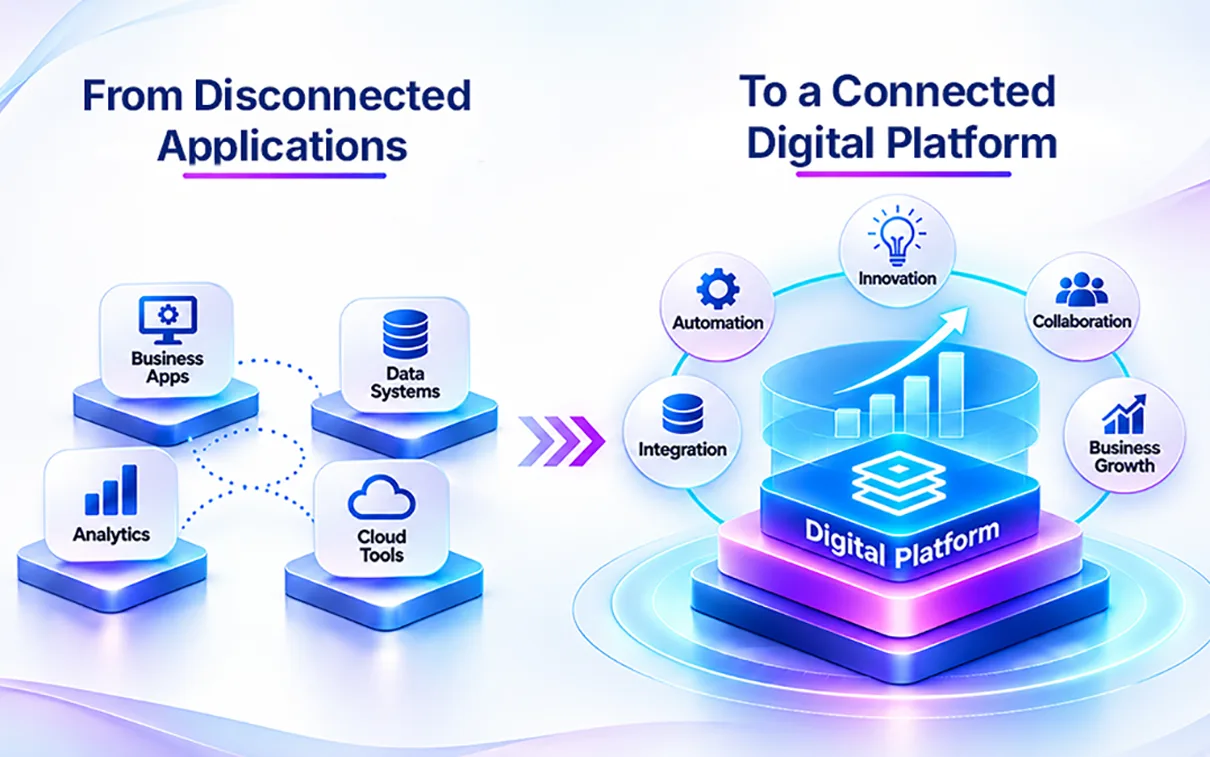
A practical CIO–CFO framework for funding coexistence and deciding when legacy systems can safely retire.
Executive takeaway
A successful go-live does not automatically end the cost of the system being replaced. During enterprise business application modernization, the new platform may begin incurring recurring charges while the legacy environment still supports critical workflows, reports, interfaces, retention obligations or rollback plans. The resulting overlap may be necessary and prudent. But without a defined owner, cost forecast and exit conditions, a temporary risk-control period can become an open-ended operating model. [1][2]
The business case should therefore include a monthly coexistence-cost bridge and a documented retirement decision, not just a deployment milestone. The CIO owns technical and operating evidence; the CFO challenges timing, obligations, and the point at which anticipated savings become demonstrable. Business, security, and records owners must validate what can safely stop and what must remain.
Go-live is a technology milestone. Retirement is an economic decision.
Imagine an organization that has completed an enterprise order-management replacement. Users can create and track orders in the new application, and the implementation team reports a successful launch. Yet several regional teams still read historical orders from the predecessor. A downstream pricing interface continues to depend on an old data feed. Month-end reconciliation uses extracts from both environments, while the legacy license renewal is only weeks away. This is an illustrative situation, not an SRISYS client engagement.
The project can reasonably be called live. It cannot yet be called financially complete. New subscriptions, cloud services, monitoring, support and vendor commitments may already be active, while some legacy expenses cannot stop until remaining business processes and dependencies are resolved. The relevant decision is not simply whether two systems run at once; it is why they do, how much incremental cash the coexistence requires, which obligations survive shutdown, and what must be proven before retirement.
This distinction is not merely an editorial preference. AWS business-case guidance explicitly calls for migration parallel-run costs to reflect both cutover timing and service decommissioning. Microsoft describes parallel deployment as a way to reduce cutover risk, while noting duplicated costs, synchronization complexity, and decommissioning effort. These are planning mechanisms, not universal cost-overrun benchmarks. [1][2]
The costly mistake is not dual running. It is an undefined end date.
A parallel environment can be the right engineering decision. Critical applications may need a staged migration, comparable transaction results, a controlled fallback path, or a period in which the new platform demonstrates stability under real workloads. Pressuring teams to shut down a predecessor immediately after go-live can increase operational and data risks. [1]
The opposite risk is less visible. A temporary exception becomes permanent because nobody has defined the retirement gate. The old system remains available “just in case,” integration teams continue supporting both stacks, business owners prefer familiar reports, and procurement renews a contract to avoid disruption. The enterprise keeps paying for a transition whose finish line is no longer explicit.
Leadership should distinguish three legitimate states: active coexistence needed to validate the new workflow; limited legacy retention needed for defined obligations or reference access; and unjustified parallel operation that no longer serves an accepted business or risk purpose. They should not be funded, governed, or described as if they were the same state.
Build the monthly CIO–CFO cost bridge
Instead of presenting a one-time project estimate plus an eventual “savings after go-live” number, build a calendar-based cash bridge as part of a structured enterprise transformation plan. Give every payment or resource commitment a unique line identifier, cost owner, expected payment month, associated system, contract/notice constraint, and retirement trigger. The gross forecast and the “continue with legacy” counterfactual must use the same period, scope and cash-versus-accrual basis; they are different views, not cost categories to be summed together.
| Exclusive monthly bucket | Count once when the cash outflow occurs | Owner / stop test |
| Legacy operation (while operating) | Legacy application/hosting licenses, maintenance, security, operating support and legacy contracts still paid while the service is active. | Which invoice or workload charge ends when? Track notice dates. |
| New-platform operation | New application subscriptions, infrastructure, monitoring, operational support and recurring services (including costs beginning before cutover). | When does each obligation first become payable? |
| Coexistence-only incremental work | Incremental dual processing, temporary synchronization, reconciliation, testing and added support not already counted in legacy/new operation. | What measurable milestone stops the temporary activity? |
| One-time change and exit payments | Migration, conversion, training, decommissioning, termination and approved archive setup that generate identifiable cash payments. | Is the cash payment committed, conditional or forecast? |
| Post-retirement residual cash | Continuing archive/access costs and unexpired contractual payments AFTER the legacy application ceases operating; do not also count them as active legacy operation. | Which obligations genuinely survive retirement, and when end? |
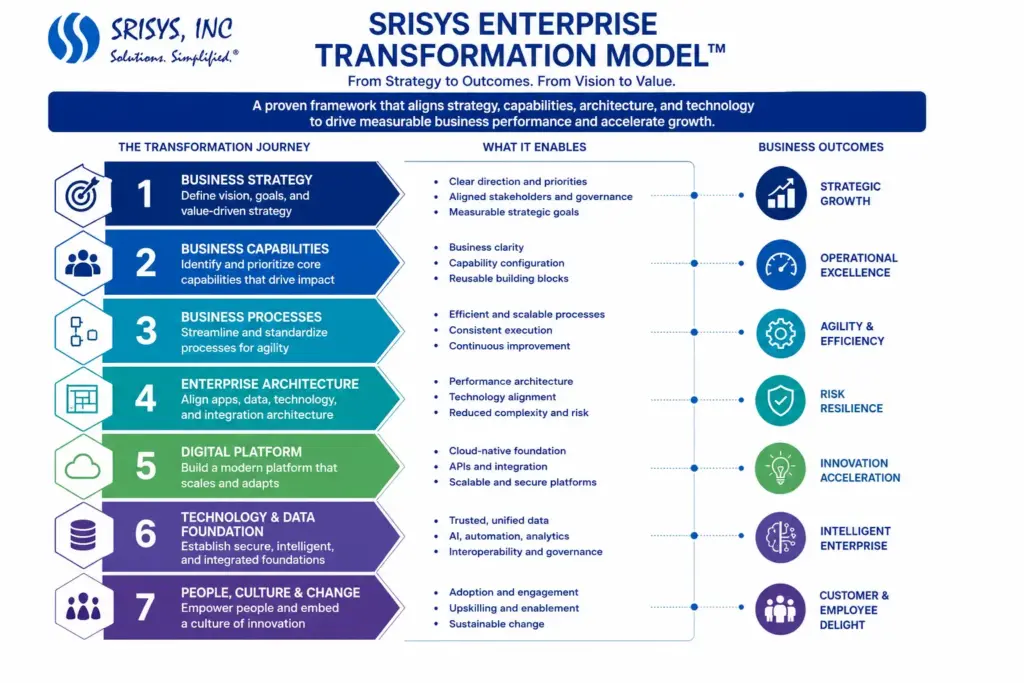
Monthly gross cash forecast = active legacy cash + new-platform cash + incremental coexistence-only cash + one-time migration/exit cash + post-retirement residual cash. Each underlying payment appears in one bucket in a given month, never simultaneously in “legacy operation” and “residual obligations.” A payment can move from one category to another at retirement, but must not be counted twice. Incremental program cash = gross monthly forecast minus the comparable monthly cash forecast for continuing the legacy approach without modernization, using consistent scope and assumptions.
Use committed-versus-avoidable and recurring-versus-one-time as attributes on each line, not additional amounts to sum. For example, an annual legacy license remains an active legacy payment before operational shutdown; any payment due afterward moves to the residual bucket. A dual-support employee is not automatically an incremental cash cost if the same salary already appears in another operating line. Model genuine additional hiring or vendor hours separately; document internal capacity impacts as a non-cash resource consequence if cash does not change.
The cash bridge is a management and forecast-control tool, not a prescribed accounting treatment or a complete profitability model. Track expenses, accruals, depreciation, amortization, impairment or capitalized costs separately under the applicable accounting policies; cash paid and expense recognized are not necessarily the same month. The model distinguishes avoidable future outflows from sunk expenditures already made. Finance must approve the accounting presentation; neither AWS nor Microsoft guidance authorizes a universal CapEx/OpEx rule.
The most important missing line in some funding presentations may be the expected cash-cost exit, with a named owner, the vendor notice date and the earliest evidence-supported month. A future-state run-rate forecast is not proof that the predecessor’s cash obligation has ended. Treat cost reductions as forecast until contractual, invoice or resource changes are verifiable.
Four dates that should appear on the same timeline
The program steering committee should approve a common sequence rather than one “launch” date. Dates can move; what matters is that changing one date visibly changes the financial case.
- New-platform spend begins. Licensing, subscriptions, infrastructure, operations, and implementation support may start before end users go live.
- Business cutover is accepted. Named process owners confirm the defined transaction scope is operating on the new platform, with monitoring and agreed contingency handling.
- Legacy retirement gates are satisfied. Residual interfaces, records, business reports, access, reconciliation, and rollback expectations are formally resolved.
- Cost exit occurs. The relevant license, hosting, support, outsourcing, and operating spend actually ceases or is reclassified as a clearly defined retained obligation.
These milestones can be far apart. A contract that renews annually may remain a committed payment even after an environment is switched off. Conversely, unused capacity may be reduced before complete retirement. CFOs need a cost-avoidance date that matches legal and vendor commitments, not only the technical shutdown date, supported by effective enterprise operations and managed services.
Why the predecessor stays alive longer than expected
Technical teams may know which servers or application instances are to be retired, business teams know which processes still require the old system, and finance knows which invoices and contractual commitments survive. Without a shared dependency-and-cost ledger, those three views can remain disconnected through launch.
A manufacturing order-management migration offers a useful hypothetical example. Purchase orders may be processed in the replacement ERP, while a supplier rebate calculation, quality exception report, or older warehouse interface still consumes legacy data. Recreating the missing behavior may require more than “migrate the database.” Owners must decide whether to replace, reroute, retire, or isolate each dependency. This is not evidence of a particular SRISYS project.
In a different illustrative situation, a financial-services case-processing application may be replaced while historical records require controlled retrieval for audits, disputes, or contractual obligations. That does not necessarily require keeping the complete processing application live. Depending on the obligations and architecture, a validated archive, read-only service, or narrower access solution might meet the need. Exact retention and accessibility requirements are organization- and jurisdiction-specific and require legal, records, security, and application-owner review.
The executive lesson is that “legacy” is not one expense line. It is a collection of business functions, data obligations, interfaces, contracts, and operational risks. Each may have a different exit date.
Treat retirement as a gated business decision
A retirement gate should specify observable evidence, a named owner, acceptance criteria and a documented exception decision, not merely a checklist the implementation team self-certifies. AWS retirement guidance recommends dependency capture, stakeholder communication, controlled shutdown, preservation of data, change management, license management and updated asset records. These are general migration practices; the evidence package below is a proposed SRISYS editorial framework, not a universal control standard. A relevant application/ERP SME must validate the technical conditions before publication. [3]
| Decision gate | Required acceptance artifact (illustrative, tailored per application) | Approver / decision |
| Business coverage | Signed process-coverage map for in-scope transactions, users, reports and exceptions; acceptance tests with agreed pass criteria; open exceptions assigned with explicit disposition. | Business process owner confirms no unmanaged critical dependence. |
| Data & records | Reconciliation results against agreed tolerances; validated historic-data retrieval path; approved legal holds/retention and privacy controls; data owner sign-off. | Data owner plus records/legal and privacy as applicable. |
| Interfaces & dependencies | Current dependency inventory showing each feed/report/batch/API rerouted, retired or explicitly retained; successful cutover or isolation evidence and named owners. | Application/architecture owner plus affected interface owners. |
| Resilience & operations | Monitored operational run, incident/rollback rehearsal or other approved contingency evidence; support runbook, on-call ownership and cutover handover signed. | IT operations lead and security/risk delegate when required. |
| Access & security | Identity/access, service-account, secrets, backups, audit and logging disposition approved; retained access is limited to approved post-retirement needs. | Security owner and platform/data owners. |
| Finance & vendor exit | Contract-notice/renewal calendar, termination charges, PO/vendor closure and revised monthly cost bridge; every surviving cash obligation identified once. | Finance/CFO delegate with procurement/vendor owner. |
| Final change approval | Retirement decision record references every accepted gate, exceptions, rollback/contingency disposition, change ticket, authorized shutdown window and post-shutdown checks. | One accountable executive / change authority; dissenting sign-offs resolved before action. |
Passing the gates does not mean destroying every database, removing every contract or eliminating every cost. It means a responsible authority accepts a documented target state: what stops, what must remain, who owns it and which risks and payments survive. Where a gate cannot pass, continue governed coexistence, assign remediation and update the forecast; do not redefine a failed gate as success merely to meet a date.
Use three scenarios rather than one optimistic retirement date
Use three explicit decision cases, each measured against the same “continue with legacy” counterfactual. The cases below are modeling choices, not market benchmarks or predictions. AWS advises multiple decision-relevant scenarios while keeping alternatives limited enough to manage; it does not require these exact three cases. [2]
| Decision case | Retirement assumption / proof | Finance and risk question |
| 1. Planned retirement | Expected process, data, interface and change gates pass by the currently approved retirement month. | Which payments stop then, and which remain committed? |
| 2. Delayed retirement | A meaningful gate fails or a contractual exit slips one reporting period (e.g., a quarter), requiring justified continued operations. | What is the additional incremental cash and continuity exposure? |
| 3. Reduced-retention alternative | Processing is retired as planned, but approved historic access/records move to a narrower archive or read-only path where feasible and SME-validated. | Can full-system operating cash end without compromising retention or service obligations? |
For every case, show the same fields: cutover month, gate-evidence date, contract notice and cash exit month, legacy and new recurring cash, temporary coexistence work, one-time change/exit payments, and true post-retirement residual cash. Record what would change if a gate slips, which cash is committed and which is avoidable. The reduced-retention alternative is conditional, not a promise that an archive is legally or technically sufficient.
Do not use a low projected cash figure to force an unsafe retirement. A longer overlap may be warranted for continuity, reconciliation or regulatory constraints. Approve that tradeoff visibly: explain what risk is bought down, who authorizes the extra cash and what evidence ends the extension. Conversely, a narrowed legacy-access solution is only appropriate when records, security, users and technical owners approve it.
Put one owner in charge of the finish line
The CIO cannot independently certify that every business record and operating process is dispensable. The CFO cannot verify technical readiness from a spending spreadsheet. And the business owner may be unable to judge integration or security consequences alone. Retirement therefore needs a joint decision, not a handoff from one function to another.
A practical operating model names one retirement accountable executive, a maintained dependency and cost ledger, and separate approvers for business readiness, technical readiness, data/records obligations, and financial exit. The steering committee reviews exceptions monthly until the defined overlap period ends. Whenever the retirement date changes, both the program forecast and the benefit-realization plan change with it.
This also changes the definition of a successful modernization program. Delivery teams still measure adoption and stability; finance tracks commitments that have genuinely stopped; leadership measures whether the enterprise has achieved the intended target operating model. “System launched” remains an important milestone, but it is not the only completion criterion.
A decision record for the next modernization steering meeting
For each material dependency that could delay retirement, complete this short decision record before approving another reporting period of parallel operation. Tie the financial impact to the same monthly cash bridge and the agreed retirement scenario.
| Decision field | Required meeting input |
| Legacy dependency | Name the business process, interface, report, record, retained service or contract that remains unresolved. |
| Retirement evidence | Specify the test result, signed reconciliation, dependency disposition, access decision or contractual proof needed to close it; identify the relevant retirement gate. |
| Accountable owner | Record one named person responsible for obtaining the evidence, plus the function that must approve the decision. |
| Target and review dates | Record the expected evidence date and the next steering-committee decision date; update both when a gate slips. |
| Financial impact | Record incremental forecast cash if retirement slips, distinguishing unavoidable commitments from avoidable spending; cite the cash-bridge line IDs. |
| Executive decision | Choose retire, retain with defined conditions, or extend governed coexistence. Record rationale, approver, exceptions and the next checkpoint. |
This is a proposed meeting tool, not a prescribed SRISYS client methodology or regulatory checklist. A failed retirement gate calls for a documented exception, a funded decision and a new review date, not an automatic shutdown.
A short checklist for the next modernization steering meeting
- What functions, records, reports or interfaces still require the legacy application, and who has approved those requirements?
- Which overlap costs are recurring, which are one-time, and which cannot be avoided even if the system shuts down tomorrow?
- What month does each major cost actually stop, including contractual notice periods and vendor commitments?
- What evidence must exist before business, IT, finance and risk owners approve retirement?
- What happens to the cash forecast and planned benefits if retirement slips one reporting period?
- Who owns the ledger, and when will the steering committee next revisit the exception list?
Modernization creates value when a new application improves the organization’s capabilities and the transition to the target operating model is managed deliberately. The useful conversation is not “How quickly can we turn off the old system?” It is “What must be true before we can stop paying to operate it, and have we funded the period needed to get there?”
Frequently asked questions
Because the new system can begin incurring operating costs while the legacy application still requires licenses, support, interfaces, reconciliation, and defined contingency coverage. A go-live date does not automatically terminate those costs. The overlap may be justified; it should be time-bound and funded.
Assign each actual payment once per month to active legacy operation, new-platform operation, incremental coexistence-only work, one-time migration/exit payments or post-retirement residual obligations. Tag each line as recurring or one-time and committed or avoidable without adding the tag totals again. Compare the gross cash forecast to an equivalently scoped status-quo cash baseline.
When the defined process-coverage tests pass, reconciliation and historic-data obligations are demonstrably satisfied, interfaces and access have a documented disposition, operational contingency is accepted, and procurement/finance identify surviving obligations. Named owners sign the evidence and one accountable change authority approves shutdown; regulated requirements vary by application.
One accountable executive should own the milestone, supported by explicit business, technology, data/records, risk, procurement, and finance sign-offs. The CIO and CFO should share the timetable and cost ledger, but neither can replace the other functions’ evidence.
Present the exclusive-bucket month-by-month cash bridge alongside the status-quo counterfactual. Compare planned retirement, a realistic delay, and a narrower retained-access option only where justified. Show invoice/contract exit dates, expected post-retirement obligations and the evidence required before forecasts become realized changes.
No. Parallel operation can be a deliberate risk-control strategy for high-impact changes. It becomes a governance problem when the reason for overlap, its cost, the owner, and the evidence-based exit conditions are undefined.
Next step: Review the assumptions in your current dual-run cost model and the conditions for retiring the legacy application. Organizations evaluating that decision can discuss their application-modernization assumptions with SRISYS.